
01 · The standard
What does BS 5852 Part 1 mean?
BS 5852 Part 1 covers cigarette and small-flame ignition tests, commonly referred to as ignition sources 0 and 1.
The standard assesses how upholstery materials react when exposed to a smouldering cigarette or a small flame comparable to a match.
02 · Upholstery covers
What upholstery can be treated?
The fire-retardant treatment is applied to absorbent upholstery cover fabric, including covers on:
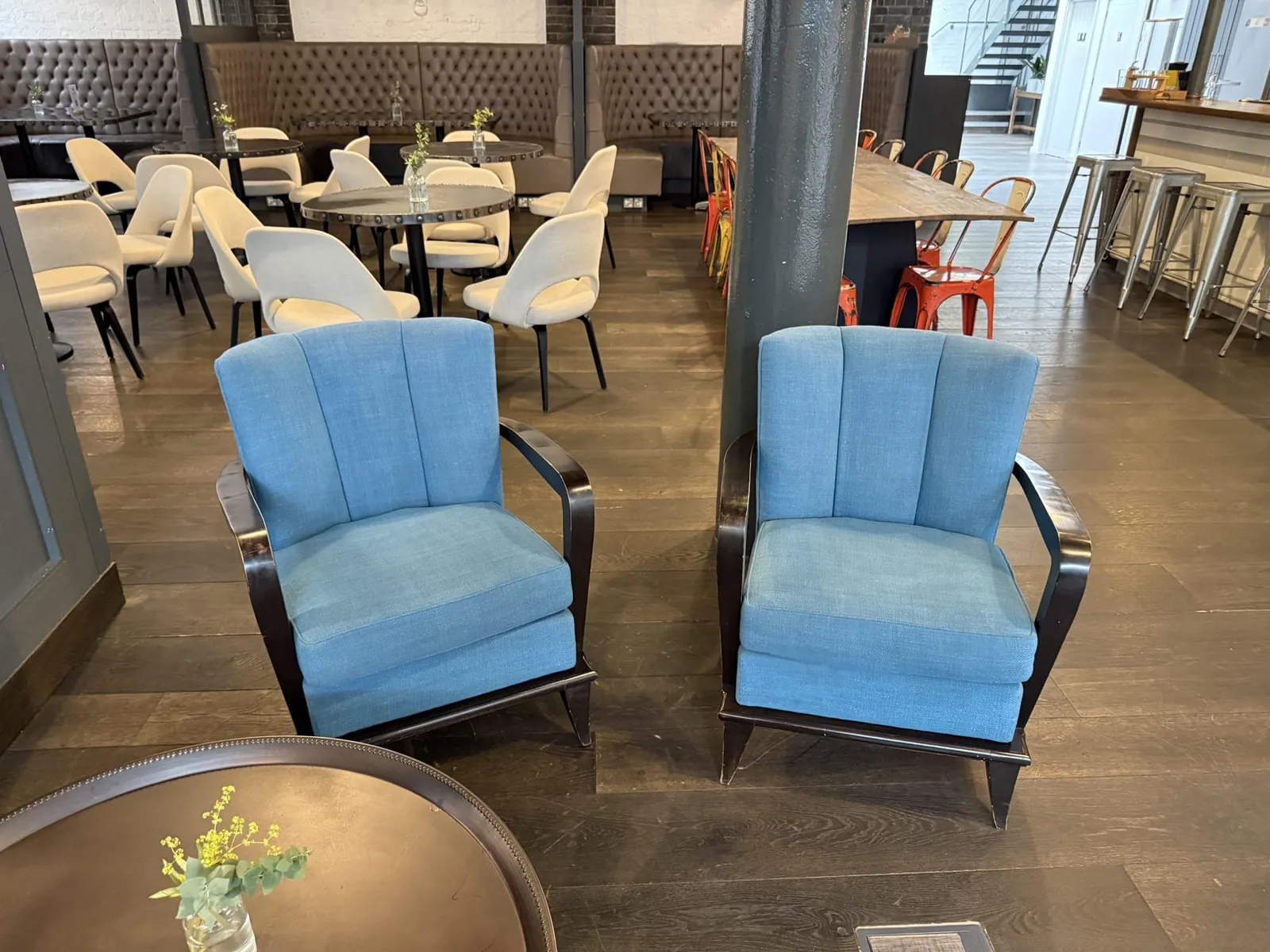
- Chairs and armchairs
- Sofas and benches
- Banquette seating
- Office and reception seating
- Exhibition and event furniture
- Removable upholstery covers
Suitable absorbent natural and synthetic cover fabrics can be treated. The fabric does not need to have existing cigarette or match resistance: suitable covers can be upgraded to both under BS 5852 Part 1.
03 · Documentation
What certificate is provided?
After treatment and payment, a Certificate of Fire Retardant Treatment is issued for the upholstery covers treated to BS 5852 Part 1.
The certificate records:
- The covers or seating treated
- The site or project
- The fire-retardant product used
- The treatment standard
- Maintenance and retreatment information
04 · Existing covers
Can existing upholstery covers be treated?
Yes. Existing upholstery covers can be treated without replacing the furniture where the fabric and construction are suitable. Covers can be treated even if the fabric initially has neither cigarette nor match resistance.
The treatment is applied evenly across the upholstery fabric. We will explain any preparation or access requirements before arranging the work.
05 · Before treatment
What information is needed?
To assess the work, provide:
- The type and number of items
- Approximate upholstery dimensions
- The cover material, if known
- The location of the furniture
- Any requirement you have been given
Photographs can also help us understand the shape and construction of the seating.