✓ Usually suitable
Raw, untreated timber
- Bare internal timber cladding
- Bare external timber cladding
- Existing cladding requiring a retrospective upgrade
- Loose boards treated before installation, where approved
BS EN 13501-1 · B-s2,d0
Retrospective impregnation treatment for suitable raw, untreated timber—applied on site across the UK with manufacturer test evidence and a treatment certificate.
Absorbed into suitable bare timber rather than forming a painted surface.
Manufacturer fire-test documentation supplied for the treatment system.
Confirms compliant application within the tested system and identifies the product, location and treated area.
The first question to answer
Impregnation depends on the condition and finish of the timber. Photographs and accurate material information help us give a useful answer before quoting.
Send the timber specification and details of any product previously applied. Photographs are optional. We will tell you whether an impregnation treatment is practical.
Reading the classification
BS EN 13501-1 classifies how a construction product reacts when exposed to fire. The complete classification matters—not just the letter B.
This is a reaction-to-fire classification. It is not a 30- or 60-minute fire-resistance rating for a wall, beam or structural assembly.
Primarily a retrospective service
Most enquiries involve cladding that has already been installed and later needs supporting fire-performance documentation. We assess the timber, calculate the treatment area, protect the surrounding surfaces and apply the specified quantity consistently.
Important specification distinction
For a new-build project, factory pressure impregnation often gives the specifier greater control over treatment before the timber reaches site. We do not provide pressure treatment.
We can apply our impregnation system at the client’s site before installation, but it should be accepted by the architect, fire consultant, project specifier or building control before the work is booked.
From enquiry to documentation
The best starting point is the fire requirement you have been given, together with accurate information about the timber.
Provide the requested classification, finish details, area and postcode. Photographs are optional.
We check whether the raw timber and proposed application match the tested treatment system.
Your quote reflects area, absorbency, access, protection, location and treatment logistics.
Surrounding glazing, flooring and finished surfaces are protected before application.
The specified quantity is applied evenly to the agreed timber surfaces.
Manufacturer test evidence and our Certificate of Fire Retardant Treatment are supplied.
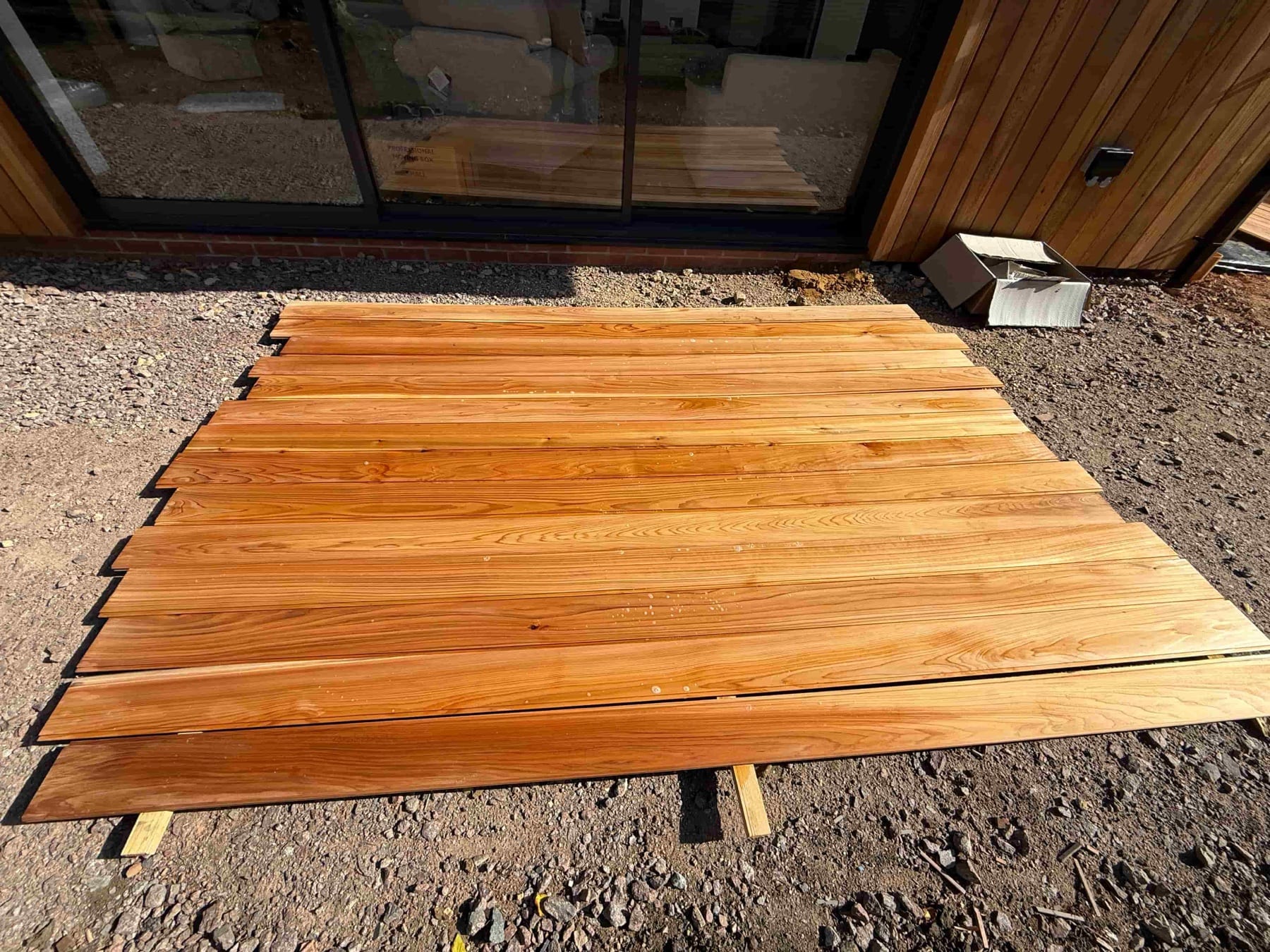 Suitable raw timber prepared for treatment
Two parts to the evidence
The documents serve different purposes and should be kept together in the project fire-safety file.
Shows the tested system and the BS EN 13501-1 B-s2,d0 classification achieved under the stated test conditions.
Confirms the suitable raw timber was treated in accordance with the tested system and identifies the site, product and treated area.
Quotations prepared individually
There are no published square-metre rates because timber type, absorbency, access and site protection can materially change the work involved.
Retrospective timber upgrade
Fifteen-year-old pine Thermowood cladding required a retrospective Euroclass B upgrade after a property survey. The client confirmed the cavity fire barriers, access was arranged by cherry picker, and the impregnation treatment was applied while protecting adjacent windows and occupied areas.
Read the projectCommon timber questions
For a project-specific answer, send the requirement and confirmation of any existing finish. Photographs are optional.
View all FAQs →We treat suitable raw, untreated timber that can absorb the impregnation product. The service can be used for internal and external timber cladding, subject to the timber species, construction, condition and project requirement.
No. Paint, varnish, oil, stain and other sealers can prevent the impregnation product from being absorbed consistently. We need clear photographs and finish details before confirming suitability.
No. This service concerns reaction-to-fire classification under BS EN 13501-1 and does not provide a 30- or 60-minute fire-resistance rating for a structural element or construction.
It can sometimes be applied at the client’s site before installation, but factory pressure treatment is often preferred and may be required for a new-build specification. The proposed system should be agreed with the project specifier or building control before work proceeds.
We provide the manufacturer’s fire-test evidence for the tested treatment system and our Certificate of Fire Retardant Treatment confirming that the suitable raw timber was treated in accordance with that system. The certificate identifies the product, site, treated area and work completed.
Provide the timber species if known, confirmation that the timber is raw and untreated, approximate square metres, whether one or both faces require treatment, installation status, access details, site postcode and the fire classification requested. Photographs are optional.
Start with photos and the requirement
Send the finish, area, access, postcode and classification requested. We’ll confirm whether the timber is suitable and prepare a tailored quotation.