Wallcoverings & reaction to fire

Fabric wallcoverings and BS EN 13501-1: when testing is required

An informational guide to treatment, supporting test data and why a Euroclass applies to an assessed fabric and construction—not every possible wallcovering installation.

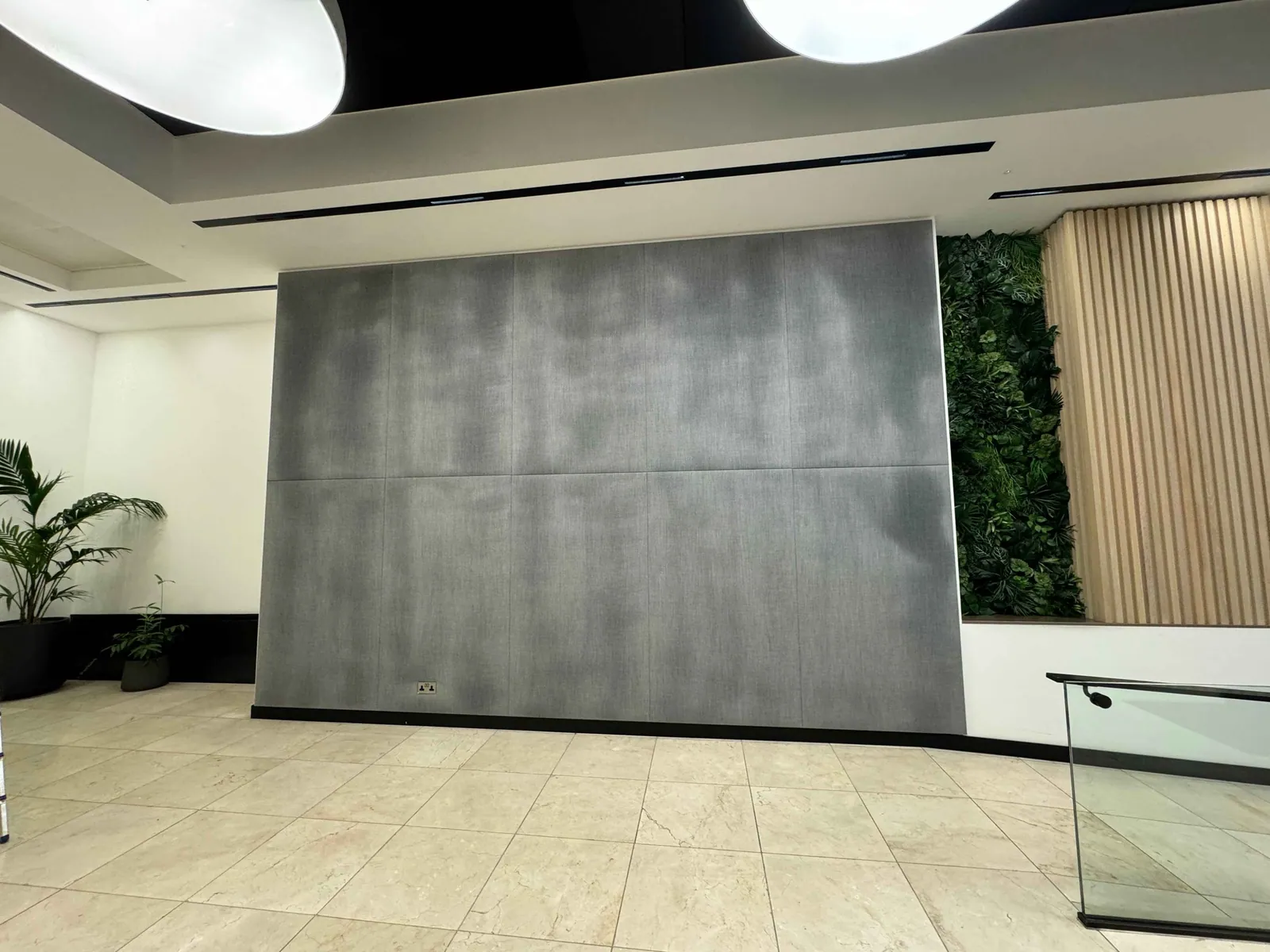
Grey fabric wallcovering panels installed in a modern commercial interior
A genuine fabric wallcovering project. Classification evidence must match the proposed end-use construction.

The direct answer: We can assess and treat suitable fabric before it undergoes project-specific fire testing, but we cannot currently certify an installed wallcovering as C-s3,d2 based on treatment alone. The complete proposed construction and its evidence must be assessed.

You are welcome to call first

You do not need to gather every technical detail before speaking to us. We are happy to discuss the project by phone, explain what the available evidence may need to cover and help you identify the right questions for the fabric supplier, manufacturer or company holding the test data.

Why an old Class 1 result should not be presented as Class C

BS 476 Class 1 was a National Class reaction-to-fire result. During the move to European classifications, some building control bodies accepted BS 476 Class 1 test results where a Class C result was requested. That was a transitional approach, not proof that the two classifications are technically identical.

In England, the 2025 update to Approved Document B removed the National Classes route for reaction to fire from 2 March 2025, subject to stated transitional arrangements. New projects should not assume that legacy Class 1 evidence will be accepted as Euroclass C. Confirm the requirement and acceptable evidence with the project's approving authority.

Reaction to fire—not fire resistance

BS EN 13501-1 classifies reaction-to-fire performance. C-s3,d2 does not describe a wall as providing a set number of minutes of fire resistance.

Primary references: GOV.UK — Approved Document B national-class changes and transition and BSI — BS EN 13501-1:2018.

What does C-s3,d2 mean?

In a BS EN 13501-1 reaction-to-fire classification, C is the main performance class. The additional s classification relates to smoke production and d relates to flaming droplets or particles. The classification belongs to the tested product or construction within the permitted field of application; it is not a free-standing label that can be transferred to any fabric wallcovering.

What the result can describe
  • The tested product or representative construction
  • The stated end-use application
  • Variants covered by the classification scope
  • The relevant smoke and droplet subclasses
What it does not automatically cover
  • Every fabric with the same treatment
  • Every adhesive or substrate
  • Both adhered and unadhered use
  • An already installed wallcovering

Why the complete wallcovering construction matters

BS EN 13501-1 considers construction products in relation to their end-use application. With a fabric wallcovering, performance can depend on more than the face fabric. The substrate, adhesive, air gap, backing, mounting method and whether the fabric is adhered or unadhered can all be relevant to the tested result and its permitted scope.

Fabric

Fibre composition, weight, weave, backing, colour treatment and other finishes can affect how the material responds.

Adhesive and fixing

An adhered construction is not automatically represented by an unadhered specimen—or vice versa.

Substrate

Plasterboard, timber-based board and other surfaces may produce different construction behaviour and evidence requirements.

Do not swap components casually

An existing report can only support the new project where its classification and field of application cover the proposed fabric and construction. A different fabric, adhesive, substrate or installation method may fall outside that evidence.

Where possible, buy fabric with relevant supporting test data

Our usual advice is to begin with a fabric whose supplier or manufacturer can provide supporting fire-test or classification data for the intended use. This is generally more practical than selecting an unevidenced decorative fabric and trying to fund a new testing programme after the design has been fixed.

Some specialist treatment companies have treated fabrics for fabric retailers or manufacturers and may hold the resulting test data. The information listed later in this guide is mainly what an evidence holder may need to decide whether its report covers the proposed product and installation—not a list you must complete before telephoning Fire Proofing Ltd.

Camira Fabrics is one example

Camira publishes product-specific composition, application and flammability information for many commercial textiles. That does not mean every Camira fabric is suitable for wallcovering or has the BS EN 13501-1 evidence required for your project: ask for the evidence for the exact product and end-use construction.

Example supplier information: Camira Fabrics — product specification and flammability information.

Why testing every combination becomes prohibitively expensive

A relevant BS EN 13501-1 testing programme typically costs around £3,000–£5,000, although the laboratory must quote the exact specimen preparation, tests, classification work and reporting needed. Different fabric types and substrate or installation combinations—including adhered and unadhered applications—can require separate supporting evidence unless the test and classification scope expressly covers the variations.

One treatment does not create one universal report

If several fabrics could be installed over several substrates using different fixing methods, the number of relevant combinations rises quickly. Testing all of them may be commercially prohibitive, so the construction should be narrowed and agreed before treatment or laboratory work is commissioned.

The £3,000–£5,000 range is an indicative guide based on current project experience, not a laboratory quotation. Costs and specimen requirements can change, and additional tests or classification work may be needed.

How an evidence holder may assess the proposed wallcovering

Call us at any stage if you would like to talk the project through. When a fabric supplier, manufacturer or specialist treatment company already holds relevant data, its technical team may follow a route like this to decide whether the evidence applies.

  1. 01
    Identify the exact fabric

    Confirm the product name, composition, weight, backing and any treatment or finish.

  2. 02
    Confirm the required class

    Obtain the exact project requirement and what evidence the approving authority expects.

  3. 03
    Define the construction

    Identify the adhesive or fixing method, substrate and whether the installation will be adhered or unadhered.

  4. 04
    Check the report scope

    The evidence holder reviews its reports, classification and permitted field of application against that proposal.

  5. 05
    Identify any evidence gap

    If the construction falls outside the existing scope, the supplier, laboratory and project team can establish what additional work is required.

  6. 06
    Treat before testing if appropriate

    Where no suitable existing evidence is available, Fire Proofing Ltd may assess and treat suitable fabric before a representative specimen is prepared for testing.

Information an evidence holder may need

You do not need all of this before calling us. These details help the company that owns the relevant report decide whether it covers the proposal.

  • Exact fabric product and manufacturer
  • Composition, weight and product specification
  • Backing, coatings and previous finishes
  • Proposed adhesive or fixing method
  • Substrate specification
  • Adhered or unadhered installation
  • Project location and intended use
  • Required classification and approving authority
  • Any existing test or classification reports
  • Programme and installation date

A treatment certificate is not a classification report

A Certificate of Fire Retardant Treatment records that identified material was assessed and treated by a competent person using the stated specialist product and process. Selecting the correct system can depend on recognising the fabric composition and knowing which treatment has relevant supporting test data.

A laboratory test or classification report serves a different purpose: it records the reaction-to-fire evidence and classification for the tested construction within its stated scope. For a wallcovering project requiring Euroclass evidence, a treatment certificate alone does not turn an installed wall into C-s3,d2.

Fabric wallcovering questions

Can Fire Proofing Ltd currently certify an installed wallcovering as C-s3,d2?+

No. We can assess and treat suitable fabric before project-specific testing, but cannot currently certify an installed wallcovering as C-s3,d2 from treatment alone. The complete proposed construction and its supporting evidence must be assessed.

Does a BS 476 Class 1 result equal Euroclass C?+

No. Some building control bodies accepted Class 1 evidence where Class C was requested during the transition, but this was a transitional approach rather than a direct technical equivalence. It should not be assumed for a new project.

Why do the adhesive and substrate matter?+

BS EN 13501-1 considers a product in relation to its end-use application. The fabric, adhesive, substrate and whether the material is adhered or unadhered can affect fire performance and the scope of the classification evidence.

How much does BS EN 13501-1 wallcovering testing cost?+

Indicative testing costs are commonly around £3,000–£5,000 for a relevant programme, but the laboratory must quote the exact scope. Different fabric and construction combinations can require separate evidence, making a broad programme prohibitively expensive.

Can an existing test report be used for a different construction?+

Only if the report, classification and permitted field of application cover the proposed fabric and construction. A change of fabric, adhesive, substrate or installation method should not be assumed to be covered.

Is it better to buy fabric with supporting fire-test data?+

Yes, where possible. Start with a fabric whose supplier or manufacturer can provide relevant supporting test or classification data for the intended application. The evidence still needs checking against the exact fabric and wallcovering construction.

What information might a company holding relevant test data need?+

It may need the exact fabric product and composition, proposed adhesive and substrate, whether the fabric will be adhered or unadhered, project location, required classification and any existing reports. You are welcome to call us before gathering this information.

Prefer to talk it through?

Call us before gathering the technical information

We are happy to discuss the project first. If another company holds relevant test data, we can help you understand what details it may need to check whether the evidence covers your proposed wallcovering.

Call 07970 522475 Read the certificates guide
Call nowGet a quote